
Substack or Die: Why Your Digital Strategy Fails Without It
From newsletters to strategic hubs of reputation, community, and growth.

Over the past decade, newsletters have undergone a renaissance. Platforms like Beehiiv, Ghost, and ConvertKit have each carved out niches, but Substack has become the reference point for journalists, creators, and institutions seeking to communicate directly with audiences—without algorithms or intermediaries.
Beyond a newsletter: a strategic hub
The mistake many make is to treat Substack as an isolated channel. Its real value emerges when integrated into a broader ecosystem—websites, social media, podcasts, events, and marketing campaigns. A newsletter is no longer just a feed of links; used well, it becomes:
Exclusive value: original insights, not repurposed content.
Consistency: a regular touchpoint that builds trust.
Community: a space for interaction, without the toxicity of X or Facebook.
This integration transforms the newsletter from a tactical channel into a strategic asset.
Personal experimentation and Substack’s growth
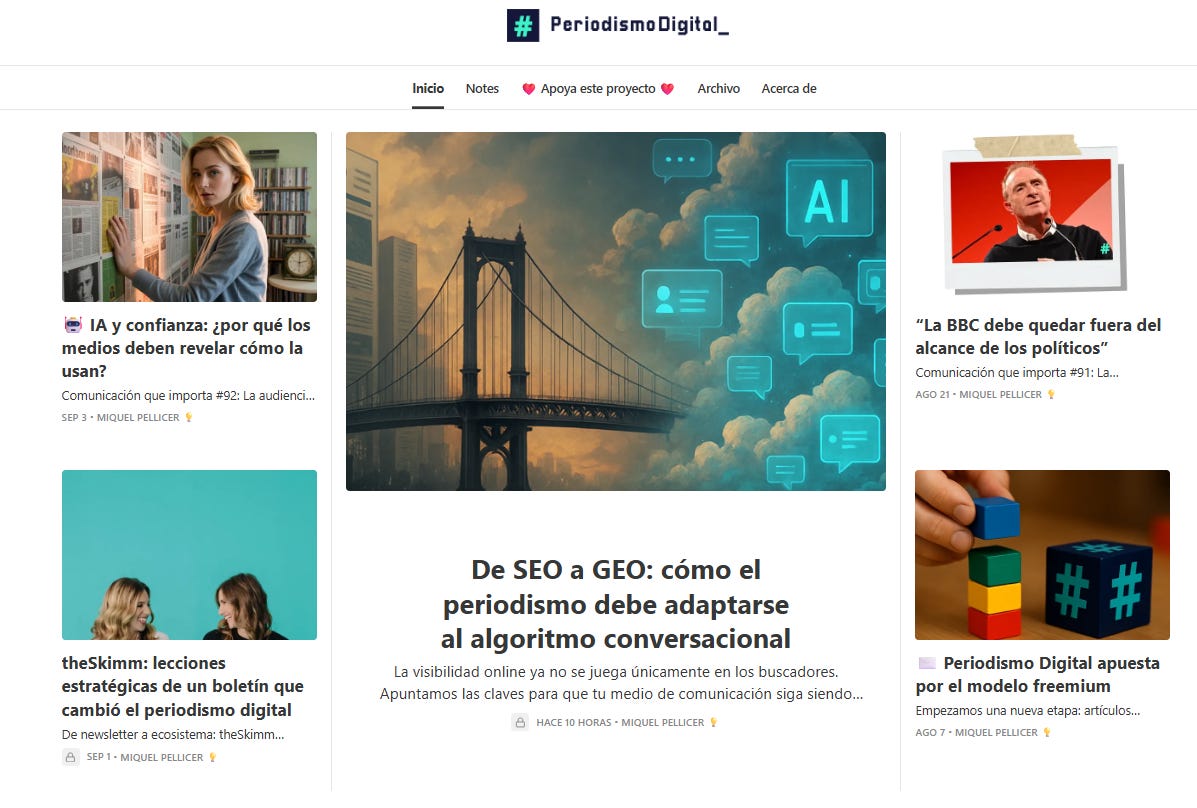
I launched Periodismo Digital on Substack in 2020 as a space for curation, analysis, and reflection. Five years later, it has become not only a publishing platform but also a personal laboratory for media innovation.
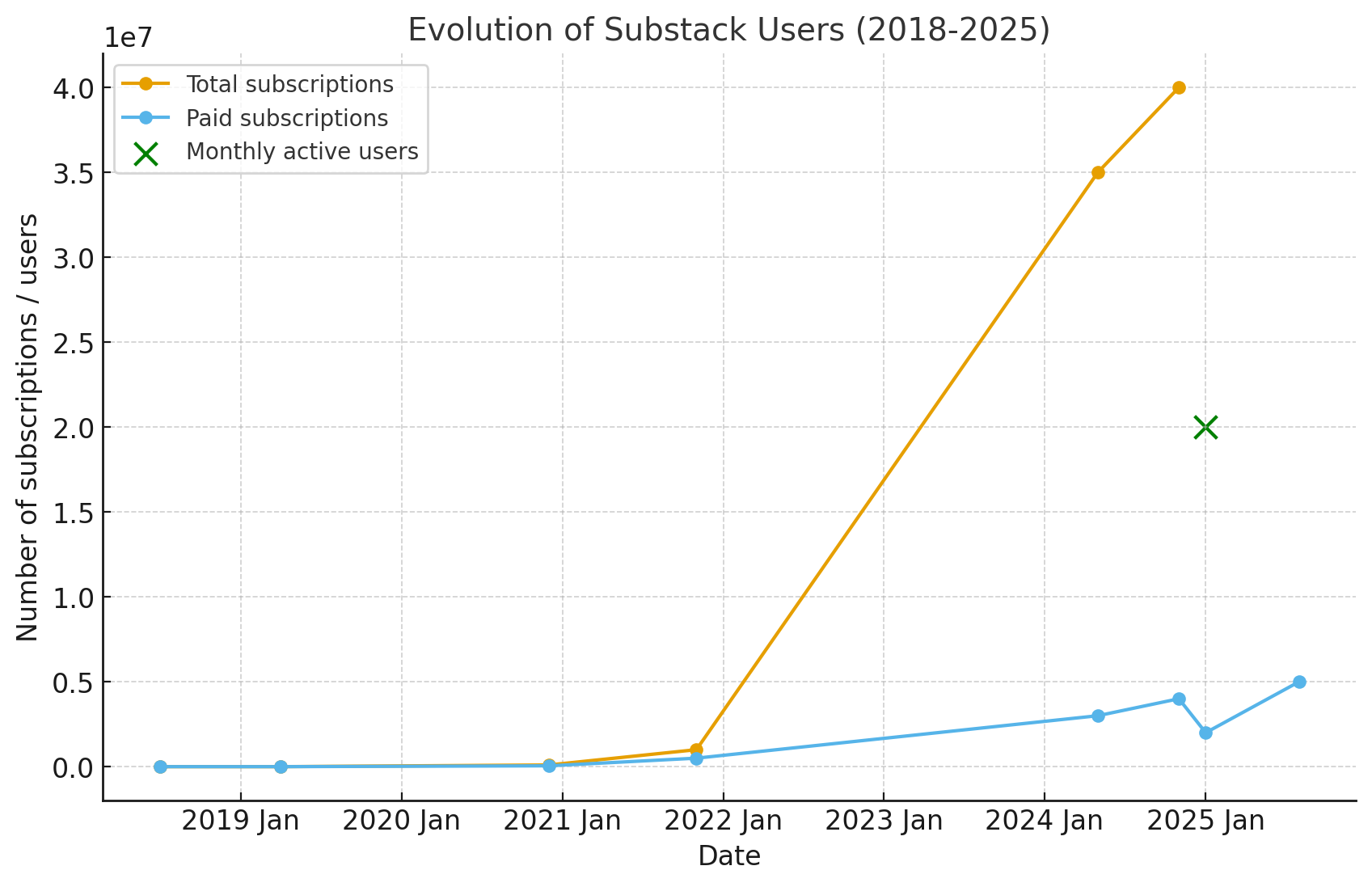
Substack itself has evolved too: it’s no longer “just newsletters,” but a hybrid platform with Notes (microblogging), podcasts, live streams, and a growing social layer. With 40 million active subscriptions, 20 million monthly readers, and over 5 million paid subscriptions, Substack has secured its role as a serious player in the creator economy.
Lessons from L.L. Barkat
Writer and editor L.L. Barkat migrated Every Day Poems from Mailchimp to Substack in 2025, citing two main reasons:
Lower costs and higher revenue: Substack’s subscription model turned a growing list into income instead of expense.
Visibility and discovery: unlike closed email systems, Substack posts live online, searchable and shareable.
She also highlighted portability, SEO, and ease of integration—features that make Substack part of a sustainable ecosystem.
Business models and monetization
While Substack emphasizes subscriptions as the backbone of creator revenue, advertising is gaining ground. Brands like Netflix and Nike now see niche newsletters as high-value channels. Deals may still be informal—negotiated in Google Docs—but they signal a maturing market where creators act as both writers and business owners.
Why it matters for organizations
Companies: strengthen authority and connect directly with clients.
Institutions: share knowledge with key communities.
Media outlets: diversify income and build loyalty.
The lesson is clear: newsletters cannot exist in isolation. Integrated into a coherent digital strategy, Substack becomes not just a publishing tool but a lever for credibility, community, and long-term sustainability.